Breast cancer treatment can change your appetite, taste, energy, and weight.
A good diet for breast cancer patients is not a perfect or restrictive plan. It focuses on enough protein, energy, fluids, and plant foods to support healing and long-term health. Breast cancer nutrition is never one-size-fits-all, so an oncology dietitian can tailor advice to your treatment, symptoms, and preferences.
This article explains what to eat during treatment, how to manage side effects, and what a healthy diet after breast cancer treatment looks like.
Key Takeaways
- Eat enough protein and calories: Protein supports healing and protects muscle.
- Match food to symptoms: A breast cancer diet uses soft, bland, or small, frequent meals depending on the side effect.
- Choose plant-rich foods: Fruits, vegetables, whole grains, and pulses support long-term health.
- Be careful with alcohol and supplements: Limit alcohol consumption and avoid high-dose vitamins, herbal products, or other supplements unless approved by your healthcare team.
- Keep going after treatment: A healthy weight and balanced meals matter for recovery
- Red Meat and Processed Meat : Limit red meat (beef, pork, lamb) and processed meat (bacon, sausages, ham). Research suggests that higher processed meat intake may increase breast cancer risk. Choose lean proteins like skinless chicken, fish, dal, and beans instead.
Table of Contents
1. Why Diet Matters in Breast Cancer
2. Diet for Breast Cancer Patients During Treatment
3.Managing Side Effects With Food
4. Foods for Breast Cancer Patients: What to Eat
5. Diet After Breast Cancer Treatment
6.Soy, Alcohol and Supplements: What the Evidence Says
7. What Does an Oncology Dietitian Do?
8. When to Contact Your Healthcare Team Urgently
9. Final Thought
10. Frequently Asked Questions
11. References
Why Diet Matters in Breast Cancer
A critical review suggests that breast cancer patients may benefit from a diet providing around 55% of calories from carbohydrates, less than 30% from fats, and 1.2–1.5 g of protein per kg of body weight daily. These recommendations should be personalised based on individual nutritional needs and treatment..
The 2022 ACS guideline reports that healthier, plant-rich dietary patterns after breast cancer diagnosis are associated with lower overall mortality. However, evidence is insufficient to confirm that diet alone reduces breast cancer recurrence. Maintaining a healthy weight, staying physically active, and following a balanced diet can support long-term health.
Diet for Breast Cancer Patients During Treatment
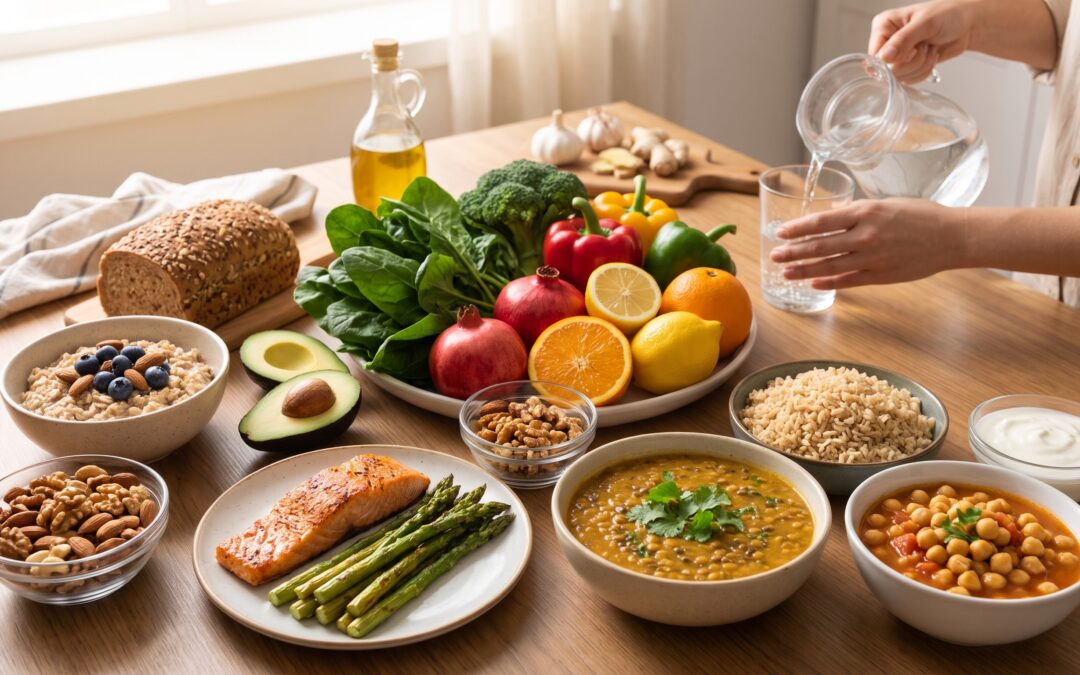
A practical diet for breast cancer patients during treatment includes:
- Protein at every meal: The review above suggests about 1.2-1.5 g per kg of body weight daily, roughly 72-90 g for a 60 kg woman. Your dietitian will set your target. See high-protein foods for cancer patients.
- Plenty of plant foods: The same review encourages 5-9 servings of fruits and vegetables daily, plus whole grains like oats, millets, and brown rice.
- Healthy fats and fluids: Nuts, seeds, and fatty fish add calories; water, soups, and buttermilk keep you hydrated.
Our Chemo Care Program and Radiation Care Program adapt meals to each treatment.
Managing Side Effects With Food
- Nausea and appetite loss: Eat small, frequent meals, try cool foods if smells bother you, and add energy-dense foods. See high-calorie meals for cancer patients.
- Mouth sores and dry mouth: Choose soft, moist, mild foods like curd rice, khichdi, and smoothies, and avoid spicy or acidic foods. See diet for mouth sores and dry mouth during cancer treatment.
- Diarrhoea or constipation: Keep fluids up. Bananas, rice, and toast may settle diarrhoea, while oats and fruit help constipation. See foods to eat during chemotherapy.
- Fatigue: Small, regular meals help. See nutrition for cancer-related fatigue.
- Bone health on hormone therapy: Aromatase inhibitors can cause bone loss. One cohort study linked higher vitamin D levels with less loss. Include calcium-rich foods and ask your doctor before taking supplements.
Foods for Breast Cancer Patients: What to Eat
| Food group | Examples | How they may help |
| Protein-rich foods | Eggs, curd, paneer, dal, fish, chicken, tofu | Support healing and muscle |
| Whole grains | Oats, millets, brown rice, whole wheat flour, wholewheat or lentil pasta, wholemeal bread | Provide energy and fibre |
| Fruits and vegetables | Berries, papaya, bananas, spinach, carrots, broccoli, cauliflower | Supply vitamins and fibre |
| Fluids | Water, soups, coconut water, buttermilk | Maintain hydration |
A breast cancer diet should adapt to your symptoms, appetite, and preferences.
Diet After Breast Cancer Treatment
Once treatment ends, the focus shifts to recovery and long-term health. A sensible diet after breast cancer treatment includes:
- Healthy weight and muscle: Regain strength, avoid weight gain, and stay active.
- Plant-based plates: Fill most of your plate with vegetables, fruits, whole grains, and pulses.
- Fewer processed foods: The American Cancer Society (ACS) guideline advises limiting processed meat, sugary drinks, and highly processed foods.
If you are recovering from surgery, see our post-cancer surgery diet. Our Preventive Care & Recovery Program supports long-term habits.
Soy, Alcohol and Supplements: What the Evidence Says
- Soy: A research study found that moderate soy consumption (at least 10 mg of isoflavones daily) was associated with a lower risk of breast cancer recurrence. Soy foods such as tofu and soy milk can be included in a balanced diet. The study found that soy food intake was linked to lower recurrence, not higher. This applies to foods like tofu and soy milk, not supplements, so check with your team if your cancer is hormone-sensitive.
- Alcohol: Evidence is mixed. Some studies link even small daily amounts to higher recurrence, while a large Kaiser Permanente study found no overall link. .. Avoiding alcohol is the safest choice.
- Supplements: Avoid herbal and high-dose supplements unless your team approves them.
What Does an Oncology Dietitian Do?
Nutrition for breast cancer patients works best with a dietitian who reviews your intake and weight, adapts foods to side effects, checks that meals suit your medicines, and coordinates with your oncologist. On targeted tablets? Read nutrition during targeted therapy. Unsure when to start? See when to consult an oncology nutritionist.
When to Contact Your Healthcare Team Urgently
Contact doctor or medical team without delay if you experience any of the following:
- Have fever, severe diarrhoea, or dizziness from dehydration
- Cannot keep fluids or medicines down
- Are losing weight rapidly or cannot eat for more than a day
Final Thought
The best diet for breast cancer patients is manageable, protein-rich, and plant-based, with food matched to your side effects. If symptoms are reducing your intake, speak early with your cancer care team and an oncology dietitian.
Need Personalised Cancer Nutrition Support?
At Oncoheal Nutrition, we offer breast cancer nutrition plans tailored to your treatment, side effects, and food preferences. Book a Consultation with our oncology nutrition team.
Disclaimer: This article is for general educational purposes only and does not replace medical advice, diagnosis, or treatment. Please consult your oncologist and a qualified oncology dietitian before making significant dietary changes or taking supplements.
FAQs
(Frequently Asked Questions)
1. What is the best diet for breast cancer patients?
The best diet for breast cancer patients includes enough protein, calories, fluids, and plant foods, adapted to your symptoms.
2. Which foods for breast cancer patients suit chemotherapy?
The best choices depend on individual symptoms and tolerance. Soft, easy-to-digest foods and protein-rich foods may help. Discuss your side effects with oncology dietitian to get personalised food recommendations.
3. Is soy safe in a breast cancer diet?
Soy foods such as tofu and soy milk appear safe in moderate amounts. Check with your team before using supplements.
4. What is a healthy diet after breast cancer treatment?
A healthy diet after breast cancer treatment is rich in vegetables, fruits, whole grains, and protein, with fewer processed foods.
5. Do I need supplements during breast cancer treatment?
Some women need vitamin D or calcium on hormone therapy.
References
- Rock CL, et al. American Cancer Society nutrition and physical activity guideline for cancer survivors. CA Cancer J Clin. 2022;72(3):230-262. Read the guideline
- Limon-Miro AT, et al. Dietary Guidelines for Breast Cancer Patients: A Critical Review. Adv Nutr. 2017;8(4):613-623. Read the review
- Nechuta SJ, et al. Soy food intake after diagnosis of breast cancer and survival. Am J Clin Nutr. 2012;96(1):123-132. Read the study
- Fazzino TL, et al. Alcohol Intake Among Breast Cancer Survivors. JMIR Cancer. 2016;2(2):e15. Read the study
- Prieto-Alhambra D, et al. Vitamin D threshold to prevent aromatase inhibitor-related bone loss. Breast Cancer Res Treat. 2012;133(3):1159-1167. Read on PubMed