Nutrition for Cancer Patients With Mouth Sores
Mouth sores are a common side effect of cancer treatment and can make even drinking water painful. They often develop during chemotherapy or radiation therapy to the head and neck, making it difficult for patients to eat and drink enough.
A well-planned diet for mouth sores focuses on soft, moist, mild foods served cool or at room temperature, with enough protein and fluid to protect your strength. Cancer nutrition is never one-size-fits-all, so an oncology dietitian can tailor advice to your treatment and symptoms.
In this blog, we explain why mouth sores happen, which foods are easier to eat, what to avoid, and when to contact your care team.
Key Takeaways
- Expect mouth sores: Chemotherapy and head and neck radiation commonly cause them.
- Choose soft, cool foods: Opt for moist, mild, soft foods that are easy to chew and swallow, as these may help reduce discomfort caused by oral mucositis.
- Avoid irritants: Spicy, acidic, hot, and crunchy foods can sting or scrape.
- Protect protein and fluids: Small, frequent, nutrient-dense meals help maintain weight.
- Report early: Severe pain or trouble swallowing needs prompt medical advice.
Table of Contents
1. What Are Mouth Sores in Cancer Treatment?
2. Why a Diet for Mouth Sores Matters
3. Oral Mucositis Diet: Soft Foods for Cancer Patients
4. Foods for Mouth Ulcers During Cancer Treatment: What to Avoid
5.Getting Enough Protein and Calories
6. Diet for Mouth Sores That Supports Eating
7. How an Oncology Dietitian Can Help
8. When to Contact Your Healthcare Team Urgently
9. Final Thought
10. Frequently Asked Questions
11. References
What Are Mouth Sores in Cancer Treatment?
Oral mucositis is inflammation of the mouth lining that causes redness, swelling, and painful sores. chemotherapy and head and neck radiotherapy can damage the cells lining the mouth, making eating and swallowing uncomfortable.
A review of mucositis reports that about 30-40% of people on chemotherapy develop it, rising to almost 90% of head and neck cancer patients having chemoradiotherapy. Sores usually appear within five to fourteen days of starting chemotherapy.
Mouth sores in cancer care can range from mild redness and soreness (Grade 1) to ulcers that make eating difficult (Grade 2), prevent solid food intake (Grade 3), or make even swallowing liquids impossible (Grade 4). Severity depends on the grade of oral mucositis, so report new or worsening symptoms to your healthcare team promptly. Mouth sores can also overlap with dry mouth or oral thrush. Our guide to dry mouth during cancer treatment may also help.
Why a Diet for Mouth Sores Matters
Painful chewing and swallowing can quickly lower intake, making it harder to keep weight and muscle. In a cross-sectional study of 121 chemotherapy patients, higher nutrient intake was linked with lower mucositis grades, although this shows an association, not proof.
Nutrition for oral mucositis aims for enough energy, protein, and fluid using foods your mouth can tolerate. Staying hydrated matters too, because dehydration and dry mouth can make sores worse.
et for Mouth Sores Matters
Oral Mucositis Diet: Soft Foods for Cancer Patients
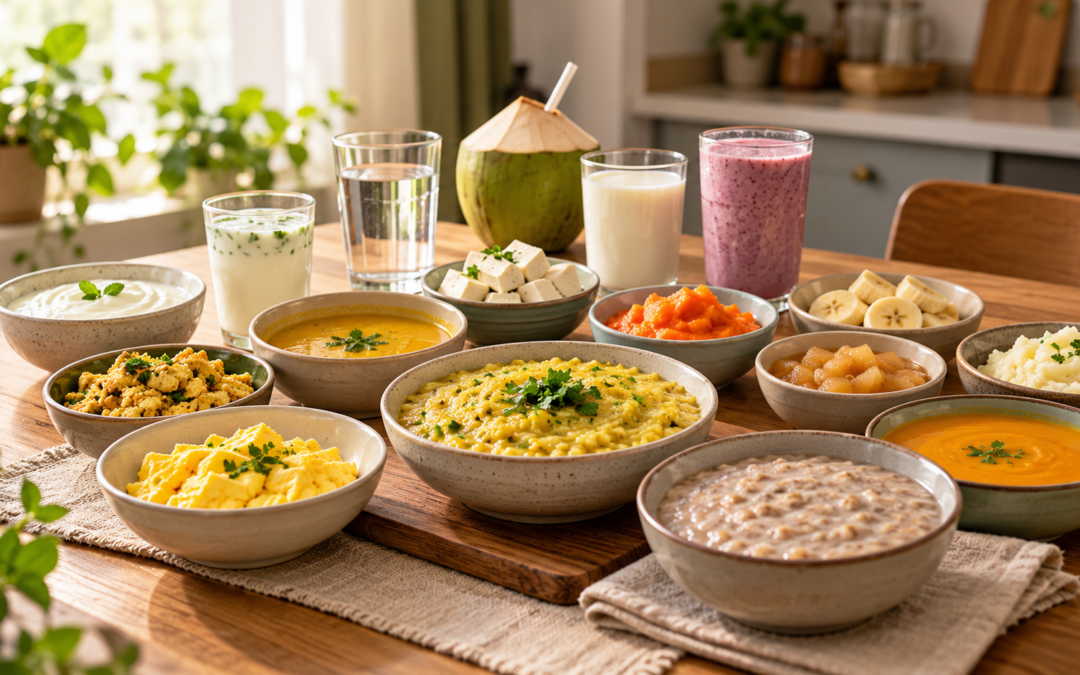
The best soft foods for cancer patients are moist, smooth, and need little chewing.
|
Food group |
Easier-to-eat examples |
How they may help |
|
Protein-rich foods |
Curd, buttermilk, Greek yogurt, soft scrambled eggs, egg custard, paneer bhurji, moong dal soup, silken tofu |
Support healing and muscle; soft dairy needs little chewing |
|
Soft grains |
Curd rice, khichdi, dalia, ragi porridge, oatmeal, soft idli, well-cooked pasta |
Provide gentle energy |
|
Fruits and vegetables |
Ripe banana, mashed papaya, stewed apple, mashed potato, well-cooked pumpkin, blended vegetable soups |
Soft and low in irritation |
|
Fluids |
Water, coconut water, thin soups, milk, smoothies, nutritional supplements |
Prevent dehydration |
Texture and temperature tips can make an oral mucositis diet easier:
- Blend and moisten: Mash or puree foods in a blender and add soup, gravy, or sauce to dry foods.
- Serve cool or lukewarm: Hot food can make sores more painful, while chilled foods and drinks such as ice chips, frozen yogurt, or popsicles can soothe.
- Use a straw: It helps liquids bypass sore areas, unless your team advises otherwise.
- Take small bites: Cut food small and cook vegetables until very soft.
Foods for Mouth Ulcers During Cancer Treatment: What to Avoid
The best foods for mouth ulcers during cancer treatment are gentle ones. Foods that burn, sting, or scratch can worsen sores and delay healing:
- Spicy foods: Chilli, pepper, and hot masalas.
- Acidic foods: Tomatoes, citrus fruits such as orange, lemon, and lime, and their juices.
- Crunchy or rough foods: Chips, namkeen, nuts, crusty toast, and raw vegetables.
- Avoid Very hot drinks such as tea and coffee, as well as heavily salted foods, which may irritate mouth sores and worsen discomfort.
- Alcohol and tobacco: Also avoid alcohol-based mouthwashes.
Getting Enough Protein and Calories
When eating hurts, eat little and often. Aim for small meals through the day and keep easy foods ready, such as curd, milkshakes, smoothies, soups, and kheer. Add calories gently with ghee, butter, cream, or smooth nut butter if tolerated.
Nutritional supplement drinks can fill gaps. For more ideas, see our guides to high-protein foods for cancer patients, high-calorie meals for cancer patients, and foods to eat during chemotherapy.
Diet for Mouth Sores That Supports Eating
Glutamine and Oral Mucositis: What Patients Should Know
Glutamine is an amino acid that helps maintain the cells lining the mouth and digestive tract. During chemotherapy and radiation therapy, these cells can become damaged, leading to oral mucositis, which causes painful mouth sores and discomfort while eating or swallowing.
Some randomized controlled trials (RCTs) suggest that glutamine supplementation may help reduce the severity of mouth sores in certain cancer patients. However, the evidence is still developing, and larger clinical trials are needed to confirm its effectiveness.
Glutamine supplements are not suitable for everyone. Always consult your oncologist or oncology dietitian before taking supplements during cancer treatment.
Good Mouth Care Protects Your Comfort and Your Appetite
Good mouth care helps keep your mouth clean, reduces irritation and may make eating and drinking more comfortable during cancer treatment.
- Rinse gently: Bland rinses such as salt water or baking soda water may help, but ask your care team before mixing one at home.
- Brush gently: Use a soft toothbrush, and see a dentist about a month before treatment if possible.
- Visit your dentist: If possible, schedule a dental check-up about one month before starting cancer treatment to identify and address dental problems early.
- Avoid irritating mouthwashes: Alcohol-based mouthwashes may dry out your mouth and worsen discomfort. Ask your care team which mouthwash is suitable for you.
If you develop painful mouth sores, bleeding or difficulty eating or drinking, contact your cancer care team promptly.
How an Oncology Dietitian Can Help
An oncology dietitian reviews your intake and weight, adapts textures to your sores, and coordinates with your oncologist. This support is part of our Chemo Care Program and Radiation Care Program. Unsure when to start? Read when should you consult an oncology nutritionist.
When to Contact Your Healthcare Team Urgently
Contact your oncology team without delay if you:
- Have severe mouth pain or cannot swallow
- Cannot keep fluids down or show signs of dehydration
- Have fever, white patches, bleeding, or sores that worsen
- Are losing weight rapidly or cannot eat for more than a day
Final Thought
A good diet for mouth sores does not need to be perfect, only gentle, nourishing, and manageable. Choose soft foods for cancer patients, avoid irritants, stay hydrated, and speak early with your cancer care team if sores reduce your intake.
Need Personalised Cancer Nutrition Support?
At Oncoheal Nutrition, we offer nutrition for oral mucositis tailored to your treatment, symptoms, and food preferences. Book a Consultation with our oncology nutrition team.
Disclaimer: This article is for general educational purposes only and does not replace medical advice, diagnosis, or treatment. Please consult your oncologist and a qualified oncology dietitian before making significant dietary changes or taking supplements.
FAQs
(Frequently Asked Questions)
1. What is the best diet for mouth sores during cancer treatment?
The best diet for mouth sores uses soft, moist, mild foods such as curd rice, khichdi, eggs, and smoothies, served cool or at room temperature.
2. What are good soft foods for cancer patients with mouth sores?
Good soft foods for cancer patients include curd, porridge, mashed potato, ripe banana, egg custard, and blended soups.
3. What should I avoid with an oral mucositis diet?
Avoid spicy, acidic, very hot, salty, and crunchy foods, alcohol and tobacco.
4. How does nutrition for oral mucositis help?
Nutrition for oral mucositis supports hydration, weight, and strength while sores heal. It does not replace medical treatment.
5. Can I eat cold foods like ice cream with mouth sores?
Cool, soft foods often soothe sores. Choose what you tolerate, and ask your team if you are unsure.
References
- National Cancer Institute. Oral Complications of Cancer Therapies (PDQ®)–Patient Version. Read the page
- American Cancer Society. Mouth Sores & Pain. Read the page
- Oral Mucositis: The Hidden Side of Cancer Therapy. Read the review
- StatPearls. Oral Mucositis. Read the article
- Dietary intake effects on severity of cancer treatment-induced mucositis: A cross-sectional study. Health Science Reports. 2023. Read the abstract
- Breastcancer.org. Eating When You Have Mouth or Throat Sores. Read the page
- National Institute of Dental and Craniofacial Research. Cancer Treatments and Oral Health. Read the page