Chemotherapy can change how your gut works. Some drugs irritate the gut and cause loose stools, while others, along with pain medicines, slow it down and cause hard, infrequent stools.
A well-planned diet for diarrhea during chemotherapy, along with simple fibre and fluid changes for constipation, can protect hydration, appetite, weight and energy. An oncology dietitian can tailor the plan to your drugs and symptoms.
This guide explains the best diet for diarrhea during chemotherapy, how to manage constipation during chemotherapy, and when to call your team.
Key Takeaways
- Fluids come first: Steady fluids help with both diarrhea and constipation.
- Diet for diarrhea during chemotherapy: Choose soft, bland, soluble-fibre foods and limit fried, spicy and greasy foods.
- Constipation during chemotherapy: Add fibre slowly with plenty of fluids, if your team agrees.
- Pain medicines: Opioid-related constipation may not improve with fibre alone, so ask your doctor.
- No self-medicating: Check before using anti-diarrhea medicines, laxatives, probiotics or supplements.
- Know the warning signs: Fever, blood in stool or signs of dehydration need prompt medical help.
Table of Contents
1. Why Chemotherapy Affects Your Bowels
2. Diet for Diarrhea During Chemotherapy
3. Are Probiotics Safe During Chemotherapy?
4. Diet for Constipation During Chemotherapy
5. Quick Comparison: Diarrhea vs Constipation Diet
6. Hydration Tips
7. What Does an Oncology Dietitian Do?
8. When to Contact Your Healthcare Team Urgently
9. Final Thought
10. Frequently Asked Questions
11. References
Why Diet Matters in Breast Cancer
Chemotherapy targets fast-dividing cells, and the lining of your gut renews quickly too. When it is irritated, food passes through too fast and causes diarrhea. A suitable diet for diarrhea during chemotherapy starts with knowing the cause. The ESMO guideline on diarrhoea notes that diarrhea is common in cancer patients, has several possible causes and can greatly affect quality of life.
Constipation has its own causes. The National Cancer Institute’s PDQ summary lists chemotherapy drugs, opioids, low fluid and fibre intake, reduced appetite and inactivity as common contributors. The ESMO guideline on constipation adds that opioid pain medicines can make constipation difficult to manage.”
Both are usually manageable. Tell your team early, because severe symptoms may need a change in treatment. Diarrhea can also occur with targeted drugs, so see our guide on nutrition during targeted therapy.
Diet for Diarrhea During Chemotherapy
Diarrhea means loose stools passed more often than normal for you, usually three or more a day, and it can quickly cause dehydration. A good diet for diarrhea during chemotherapy replaces fluids and uses gentle foods.
A 2022 study in colorectal cancer patients found that a vegetable-based diet with controlled fibre helped manage chemotherapy-induced diarrhea. A 2025 meta-analysis also found that dietary counseling reduced both diarrhea and constipation.
- Small, frequent meals: Eat 5-6 small meals instead of 3 large ones.
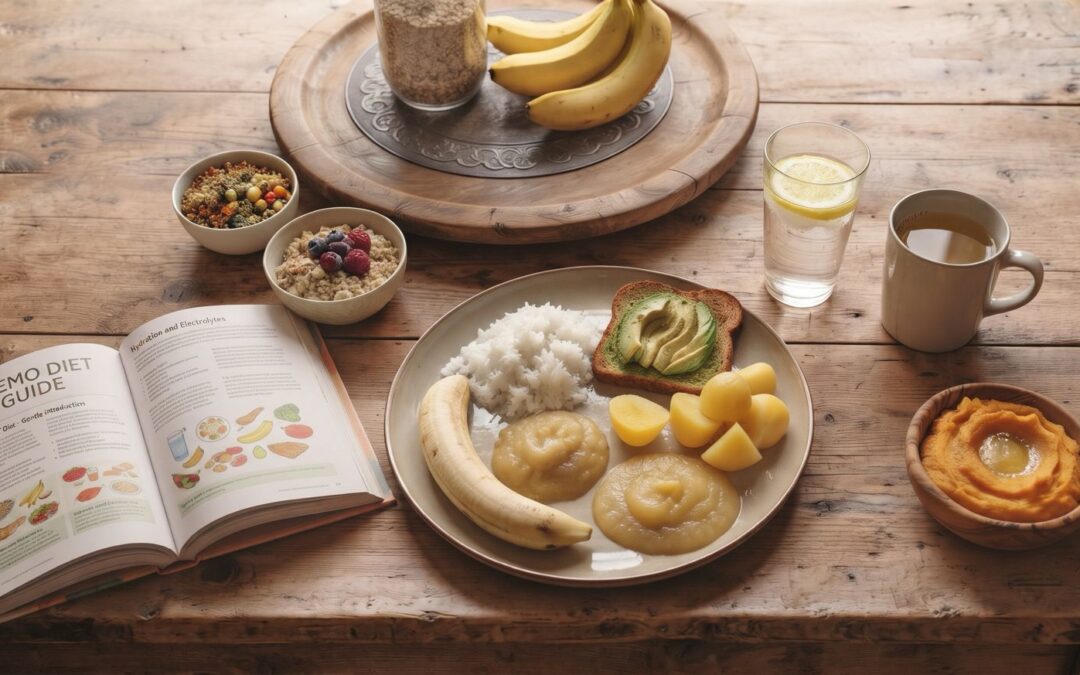
- Soluble-fibre foods: Ripe bananas, peeled apples, oats, white rice, peeled boiled potatoes and boiled carrots.
- Fluids and electrolytes: Drink water, ORS (oral rehydration solution) and clear broth throughout the day to replace fluids and electrolytes lost through diarrhea.
- Potassium-rich foods: Bananas and peeled potatoes replace potassium lost in loose stools.
- Proteins: Boiled egg, curd (if tolerated), moong dal khichdi, and boiled or baked chicken or fish.
- Limit: Fried, spicy, greasy and very sugary foods, caffeine, alcohol and wheat bran.
- Go slow on milk: If dairy worsens symptoms, cut back. Curd or buttermilk is often better tolerated.
Follow this diet for diarrhea during chemotherapy while symptoms last, then widen your choices as stools settle. The BRAT diet (bananas, rice, applesauce, toast) is too restrictive to be your only diet for diarrhea during chemotherapy, so add other soft, protein-rich foods. See foods to eat during chemotherapy and high-protein foods for cancer patients. If diarrhea follows radiation, read our radiation therapy diet.
Are Probiotics Safe During Chemotherapy?
Probiotics contain beneficial bacteria that support gut health. However, their safety during chemotherapy needs careful consideration, especially in patients with weakened immunity.
A meta-analysis found that nutritional supplementation may help reduce diarrhea during cancer treatment. However, more research is needed to confirm the safety of probiotics in patients with low immunity. Some probiotics may pose risks in these patients.Always consult your oncologist or oncology dietitian before taking probiotics or other supplements during chemotherapy.
Diet for Constipation During Chemotherapy
Constipation during chemotherapy means hard, dry or infrequent stools, or straining. The PDQ summary recommends prevention where possible, tracking bowel movements daily, and treating causes such as low fluid and fibre intake and inactivity.
- Increase fibre slowly: Add fibre over several days and drink more fluid as you do, if your doctor agrees.
- Fibre-rich foods: Oats, whole-wheat roti, brown rice, dals, fruits with skin, cooked vegetables, nuts and seeds.
- Prunes and dried fruit: Soaked prunes, kiwi, dates, raisins, figs or prune juice.
- Warm fluids: Warm water, herbal tea or soup. With mouth sores, see our diet for mouth sores.
- Fibre Supplements and Tube Feeding: Fibre supplements may help manage diarrhea or constipation during chemotherapy. Certain supplements can also be given through feeding tubes when needed. An oncology dietitian can recommend the right option based on the patient’s needs and feeding method.
- Gentle movement: A short daily walk helps, if your doctor approves.
Unlike the diet for diarrhea during chemotherapy, this plan needs more fibre. If your appetite is poor, check with your dietitian first, and see high-calorie meals for cancer patients. Fibre alone is often not enough for opioid-related constipation, so ask your doctor for a plan.
Quick Comparison: Diarrhea vs Constipation Diet
This table compares the diet for diarrhea during chemotherapy with the constipation plan.
| Focus | Diarrhea | Constipation |
| Fibre | Soluble, controlled fibre | Gradual increase |
| Best foods | White rice, khichdi, boiled potato, curd | Prunes, dates, oats, dal, cooked vegetables |
| Limit | Fried, spicy, greasy foods, caffeine, bran | Refined foods, gas-forming foods if bloated |
Hydration Tips
Fluids are the base of any diet for diarrhea during chemotherapy and of constipation relief. Most people need about 8-10 cups daily, and more with loose stools, unless your doctor has restricted fluids.
- Diarrhea: Sip water, ORS, clear broth and coconut water through the day, with extra after each loose stool.
- Constipation: Drink water and warm fluids regularly. If dryness bothers you, read dry mouth during cancer treatment.
What Does an Oncology Dietitian Do?
An oncology dietitian reviews your drugs, symptoms, weight and food preferences, then builds a safe diet for diarrhea during chemotherapy or a constipation plan that keeps protein and calories up. They also check whether fibre, probiotics or supplements suit you and coordinate with your oncologist.
Our Chemo Care Program adapts your diet during chemotherapy to each cycle. Not sure when to get help? Read when to consult an oncology nutritionist. See also nutrition for cancer-related fatigue and our diet for breast cancer patients.
When to Contact Your Healthcare Team Urgently
Contact your doctor or medical team without delay if you experience any of the following:
- Diarrhea lasting more than 24-48 hours, or six or more loose stools a day
- Blood in stool, black stools or severe belly pain
- Fever, dizziness, very dark urine or little or no urine
- Unable to keep fluids or medicines down
- No bowel movement for 2-3 days, or constipation with vomiting, swelling or cramps
Final Thought
A gentle diet for diarrhea during chemotherapy and a gradual high-fibre plan for constipation during chemotherapy can make treatment far more comfortable. Match food to symptoms, keep fluids up and talk to your team early.
Need Personalised Cancer Nutrition Support?
At Oncoheal Nutrition, we create a personalised diet for diarrhea during chemotherapy and constipation plans around your treatment, side effects and food preferences. Book a Consultation with our oncology nutrition team.
Disclaimer: This article is for general educational purposes only and does not replace medical advice, diagnosis, or treatment. Please consult your oncologist and a qualified oncology dietitian before changing your diet during chemotherapy or taking supplements, laxatives or anti-diarrhea medicines.
FAQs
(Frequently Asked Questions)
1. What is the best diet for diarrhea during chemotherapy?
The best diet for diarrhea during chemotherapy is small, bland meals such as bananas, white rice, khichdi, peeled boiled potatoes and oats, with plenty of fluids. Avoid fried, spicy and greasy foods.
2. What helps constipation during chemotherapy?
More fluids, gradual fibre, prunes or dates and gentle walking can help. Check with your doctor before using laxatives.
3. Can I have diarrhea and constipation in the same cycle?
Yes. Different drugs, anti-nausea medicines and changes in intake can cause both. Report both to your team.
4. Should I eat high-fibre foods if I have diarrhea?
Keep fibre controlled in your diet for diarrhea during chemotherapy and limit insoluble fibre such as bran and whole grains. Soluble-fibre foods like oats and bananas are usually better tolerated, and this also applies to diarrhoea during chemotherapy.
5. Are probiotics safe during chemotherapy?
A meta-analysis found that nutrient supplementation reduced diarrhea incidence, but the ESMO guideline notes that probiotics need more safety research in people with weak immunity. Use them only if your oncologist approves.